
What Matters Most to You?
Click on each button to learn more about Anna
Each section begins with a short introduction. Open any topic to learn more.

Why I’m Running
Why Sechelt matters to me, why I am stepping forward now and what I hope to contribute.
Read more
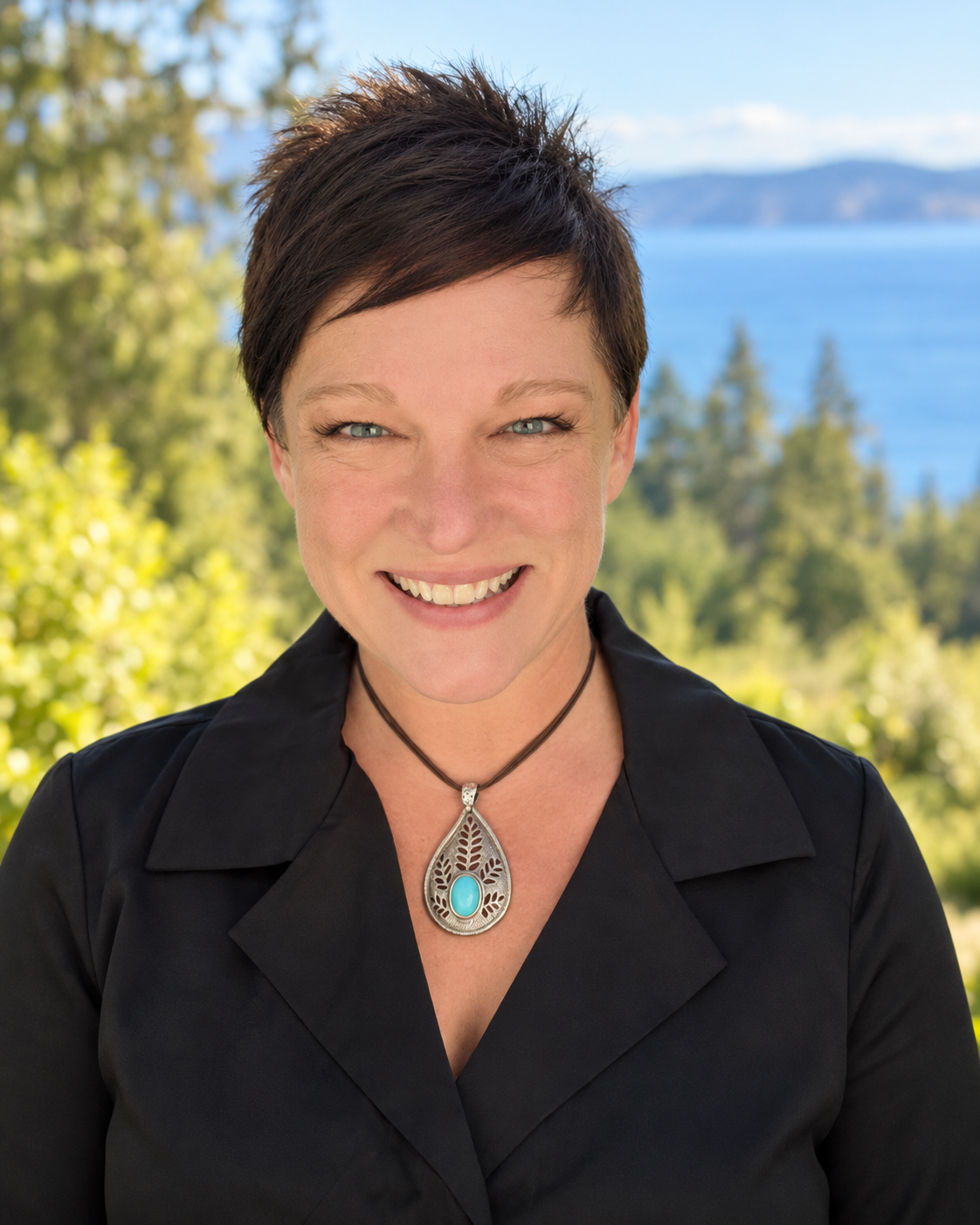
Meet Anna
My background, family, education, volunteer work and connection to this community.
Read more
Experience
How strata management, animal-welfare leadership, research, banking and bylaw training prepared me for practical public service.
Read more
How I’ll Govern
Independent judgment, constructive disagreement, evidence-based decisions and follow-through.
Read more
Priorities
The areas I believe deserve sustained attention to keep Sechelt complete, livable and prepared for the future.
Read more
Community Safety
A practical approach that joins compassion with accountability and measures programs by what they achieve.
Read more01 / ExploreWhy I’m RunningWhy Sechelt matters to me, why I am stepping forward now and what I hope to contribute.
I want Sechelt to be a place my daughters can choose to come back to—and a place where I can grow older with confidence.
My daughters were born at Sechelt Hospital, grew up on the Sunshine Coast and graduated from Chatelech Secondary. Now they are beginning university and finding their own paths. Their futures are theirs to choose, but I hope building a life here will be a real option—not just a fond idea about the place they grew up.
Sechelt is where I work and where I plan to grow older. My interest in its future is personal, but we all want the same thing: neighbourhoods where people feel safe, businesses that can succeed, places to gather, and a community where people can put down roots and stay connected.
Those things depend, in part, on decisions made around the Council table. Municipal government may seem distant until the decision concerns your street, your neighbourhood, your business or your tax bill. It shapes how we maintain what we already have, where we welcome growth, which natural areas we protect and what we leave for the next generation.
The next Council will face growth, aging infrastructure, rising costs and pressure on local services. There will be difficult choices, and postponing them does not make them easier. A repair deferred can become a larger bill. A concern left unanswered can become a loss of trust. Planning ahead gives us more choices than waiting for a crisis.
Council should come prepared, understand its responsibilities, listen carefully and explain its decisions clearly.
Good decisions require more than good intentions. They require evidence, accountability and follow-through.
For three years I was 1 of 3 volunteer members of the public, appointed to the District of Sechelt Community Safety Committee. I worked to understand residents’ concerns and the tools available to respond. I presented proposals to Council and co-founded Raising Sechelt because I believed those concerns needed a clearer, more organized voice. Running for Council is my next step: bringing my working experience, research skills and practical approach to the decisions themselves—and accepting responsibility for the follow-through.
I also want my daughters’ generation to see public service as something worth taking part in. We can ask hard questions without making enemies, disagree without contempt and change our minds when the evidence calls for it.
That is the kind of Council member I intend to be: someone who comes prepared, works with others and returns to the question that matters most—did we make things better?
02 / ExploreMeet AnnaMy background, family, education, volunteer work and connection to this community.
I grew up in West Vancouver and have lived, worked and studied in Vancouver, Alberta and Oregon. My career has taken me through animal care, humane-society leadership, research and policy, banking, strata management and community safety.
My early career was spent in animal welfare. I worked in veterinary clinics, humane societies, served as Director of Operations for the Humane Society of Willamette Valley in Oregon, helped develop and implement behaviour and welfare assessment policies for 37 BC SPCA shelters and later managed the Sunshine Coast BC SPCA branch.
I have never lost my curiosity or my desire to keep learning. My education and training have taken me from Capilano College to Simon Fraser University, the University of Lethbridge, the University of British Columbia and the Justice Institute of British Columbia. Just as important, much of what I know has been learned outside the classroom—through work, volunteering, research and direct experience.
Over the years, I have volunteered with patients in the occupational therapy program at Riverview Hospital (1994), visited seniors’ care homes with my certified therapy dog, served as an Instructional Facilitator with UBC’s Centre for Teaching and Academic Growth (2001), spent three years on the Board of the Halfmoon Bay Childcare Centre (2011–2014), and served on the District of Sechelt Community Safety Committee (2023–2025).
My daughters were born at Sechelt Hospital and graduated from Chatelech Secondary School. As they begin their university years, I have the time and readiness to take on a new public responsibility.
I have not spent my life in politics. I have spent it learning, managing, serving, solving problems and taking responsibility for difficult work. Running for Council brings those parts of my life together.
03 / ExploreExperience That Translates to CouncilHow strata management, animal-welfare leadership, research, banking and bylaw training prepared me for practical public service.
I did not set out to build a political résumé. I built a working one.
My experience spans strata management, animal-welfare operations, research and policy, banking, bylaw training and community safety. Across those fields, the work has required many of the same core skills Council needs: understand the rules, manage resources carefully, make difficult decisions, explain them clearly and take responsibility for what happens next.
Strata management: governing at the human scaleA small-community parallel to municipal government: shared property, infrastructure, budgets, legal duties, bylaws and people who do not always agree.
A strata is a small community with shared property, infrastructure, budgets, legal obligations, bylaws, maintenance needs—and people who do not always agree. It is one of the closest everyday parallels to municipal government.
As a licensed strata manager, I work with councils and owners on operating budgets, contingency planning, contracts, repairs, legislation, chairing meetings and managing group dynamics, records, insurance, disputes and long-term decisions. I translate technical, legal and financial information into language people can understand and help groups distinguish between what they want to do, what they can afford and what they are legally required to do.
This work has taught me that delayed decisions often become more expensive, unclear communication creates mistrust and small unresolved conflicts can grow. Difficult decisions are more likely to be accepted when the process is fair, the reasoning is clear and people know their concerns were genuinely considered.
Animal-welfare leadership: compassion needs strong systemsCompassion succeeds when it is supported by sound policy, trained people, responsible budgets, clear standards and difficult decisions when necessary.
Leading busy animal-welfare organizations taught me that care alone does not run an effective system. Compassion must be supported by sound policies, trained people, responsible budgets, clear standards and the willingness to make difficult decisions.
I served as Director of Operations for the Humane Society of Willamette Valley in Oregon, with a staff and volunteer count of approximately 80 people. With the BC SPCA, I helped develop and implement behaviour and welfare assessment policies for 37 shelters and later managed the Sunshine Coast branch. The work included supervising employees and volunteers, developing procedures, educating the public, managing operations and making difficult decisions in emotionally charged circumstances.
Animal welfare shaped how I understand compassion and accountability. Compassion without boundaries can fail those it is intended to help. Accountability without compassion can become inhumane. Good leadership requires both.
Research and policy: evidence before labelsDefine the problem, test assumptions against evidence and change course when the evidence shows an initial belief was incomplete or wrong.
At UBC’s Animal Welfare Program, I studied whether pit bulls adopted from a shelter were more aggressive than other adopted dogs. Published in the peer-reviewed journal Animal Welfare in 2011, the study found no evidence of greater aggression among the pit bulls studied.
I presented the research to an Ontario legislative committee in 2012, used local bite data to challenge breed-specific proposals before Burnaby Council in 2013, and was interviewed for Science Vs in 2023.
That work reflects my approach to public policy: question assumptions, examine the evidence and let the findings guide decisions.
Related links
Peer-reviewed paper ↗ (opens in a new tab)
Ontario committee transcript ↗ (opens in a new tab)
Banking: trust lives in the detailsAccuracy, confidentiality and accountability are essential when people place their money and trust in an institution.
At TD Bank, accuracy, confidentiality and accountability were non-negotiable. Money had to balance. Records had to be correct. Rules had to be followed. Difficult decisions had to be explained to the people affected.
Municipal budgets are much larger, but the underlying responsibility is similar. Every dollar Council spends came from someone. Financial decisions should be understandable, defensible and connected to clearly stated priorities.
A budget is not merely a table of numbers. It is a record of what a government has decided matters most.
Bylaws and investigation: a rule is only real if people can rely on itFair evidence gathering, defensible records, impartial interviewing, discretion and proportionate responses.
I completed Bylaw Compliance and Investigative Skills I and II through the Justice Institute of British Columbia. Through this program I learned the importance of bylaws as a tool for managing the daily life of a municipality.
Good enforcement is not maximum enforcement. It means clear expectations, accessible reporting, consistent treatment, reliable follow-up and consequences that fit the conduct.
People should not have to guess whether a complaint matters, who is responsible for responding or what happens when serious or repeated violations continue.
04 / ExploreEvidence-based Politics: How I’ll GovernIndependent judgment, constructive disagreement, evidence-based decisions and follow-through.
How I Will Govern
I will vote for clearer accountability, better information and meaningful public participation. Before supporting a proposal, I will ask what problem it addresses, what evidence supports it, what residents have contributed and how we will know whether it works.
That means establishing a starting point, choosing useful benchmarks, setting measurable goals and agreeing on when results will be reported publicly. The following examples hint at how I would have approached certain previous Council decisions differently.
Community safety: retain public participation and measure results
January 21, 2026
Council dissolved the Community Safety Committee and replaced it with a staff-led technical working group, removing public membership.
I would have supported stronger technical coordination while retaining independent public participation. I would have proposed an amendment to include at least one public member, require regular non-confidential public updates, establish clear priorities and measurable goals. Residents and businesses affected by safety concerns should have an ongoing voice in identifying problems and assessing whether responses are working.
What my vote would support: A community safety model that combines professional expertise with lived experience, makes responsibilities clear and reports results openly—so residents can judge whether conditions are improving.
Create a path back to reconciliation
September 25, 2024
Council’s decision: Council directed the Mayor not to communicate or participate with shíshálh Nation as a representative of the District of Sechelt.
How I would have approached it: I would have respected the boundary requested by shíshálh Nation and proposed an amendment that left open a respectful path toward reconciliation—through listening, education and a commitment to rebuilding trust.
What my vote would support: Accountability that includes taking responsibility, learning and following through. Council has a responsibility not only to address conflict, but also to recognize opportunities for growth and improvement when they present themselves. Our community and the next generation are watching how we handle disagreement. I believe good governance should model productive and meaningful steps towards rebuilding trust in important relationships.
Official Council record — September 25, 2024 (opens in a new tab)
Staffing and spending: obtain the information needed for oversight
July 16, 2025
Council defeated a request for five years of departmental staffing numbers, aggregate salary totals and information on how staffing needs and productivity were assessed. Concern for staff morale was one of the reasons given.
I would have voted to obtain that information, with employee privacy protected. Council is responsible for understanding how public spending, staffing levels and service delivery are connected. Asking for evidence is responsible oversight—not a criticism of staff. A lack of clear information can invite speculation and unfair assumptions, which can also undermine morale.
I would also have requested workload, vacancy, overtime and service-performance data. I would have sought comparisons over time and with similar municipalities, accounting for differences in responsibilities and service levels. Those findings should inform measurable service targets and accessible public reporting that shows both the demands on staff and the results they deliver.
What my vote would support: Greater financial transparency, an evidence-based assessment of staffing needs and a clear public account of how spending supports the services residents receive.
Original proposal (opens in a new tab) · Council minutes (opens in a new tab)
Community First. Politics Second.
05 / ExplorePriorities for SecheltThe areas I believe deserve sustained attention to keep Sechelt complete, livable and prepared for the future.
Priorities for a complete and livable Sechelt
These are the areas I believe deserve sustained attention: a functioning downtown, responsible growth and housing, well-maintained infrastructure, sound financial stewardship, safe and welcoming public spaces, practical environmental planning and open, understandable government.
A functioning and vibrant downtownSuccessful local businesses, useful services, active public spaces, accessible transportation, comfortable walking routes and consistent attention to safety and access.
A strong downtown is a community gathering place, a source of local employment and one of the clearest ways residents and visitors experience Sechelt.
A safe, connected and welcoming communitySafe crossings, cared-for parks, connected sidewalks, useful recreation, reliable lighting and clear ways to report concerns and learn what happens next.
A complete community is built in practical details: safe crossings, cared-for parks, connected sidewalks, useful recreation, reliable lighting and a call for help that receives an answer.
A welcoming Sechelt is a place where a child can bike to a park, a parent can cross the street with a stroller, a senior can rest on a bench and a teenager has somewhere worthwhile to go.
It means clean public spaces, connected walking routes, reasonable traffic speeds, accessible recreation and clear ways to report a concern and learn what happens next.
Some of this is within the District’s direct control. Some requires cooperation with the SCRD, the Province, police, schools, service providers and community organizations. Council’s job is to know the difference—and still work toward the result.
Responsible growth and housingPlan housing alongside infrastructure, transportation, water, sewer capacity, environmental constraints, neighbourhood character and community services.
Sechelt will continue to grow. The question is not simply whether growth occurs, but how well it is planned.
New housing should be considered alongside infrastructure, transportation, water, sewer capacity, environmental constraints, neighbourhood character and the services new residents will need.
Approving development without planning for its consequences is not a housing strategy. Rejecting every change is not a strategy either.
Growth should leave the community more complete—not simply more crowded.
Infrastructure and financial stewardshipIdentify risks early, maintain essential assets before failure and explain clearly why public money is being spent in a particular order.
Roads, drainage, sewer systems, sidewalks, public buildings, parks and waterfront assets are easy to take for granted until they fail.
I support long-term planning that identifies risks early, maintains essential assets before failure, sets understandable priorities and reduces the cost of repeatedly deferring necessary work.
Residents should be able to see where public money is going, why projects were prioritized and how Council is managing both immediate needs and future obligations.
Good stewardship is not simply spending less. It is spending in the right order.
Our natural environmentBuild practical, measurable environmental responsibility into infrastructure, land-use and development decisions from the beginning.
Sechelt’s natural setting is part of our identity, quality of life and long-term economic strength.
Shorelines, forests, soils and natural drainage systems affect where and how we build, how we manage risk and what future residents will inherit.
Environmental responsibility should be built into infrastructure, land-use and development decisions from the beginning. Good environmental planning should also be practical, measurable and connected to clear outcomes.
Protecting what matters begins with understanding how it functions.
Open government. Better conversations.Plain-language decisions, accessible information, early engagement and a process residents can understand, question and trust.
Residents should not need to be experts in municipal procedure to understand what their government is doing.
Council decisions should be explained in plain language. Information should be reasonably easy to find. Public engagement should begin early enough to influence a decision, not after the important choices have already been made.
People will not agree with every outcome. They should still be able to understand the reasoning, question the decision and trust the integrity of the process.
Good government does not require agreement. It requires a process people can understand and a genuine two-way conversation between residents and their Council.
06 / ExploreCommunity SafetyA practical approach that joins compassion with accountability and measures programs by what they achieve.
Everyone counts. Every consequence counts.
In Sechelt’s community-safety work, I heard the same problem described from very different sides:
- A person in crisis needed effective help.
- A resident no longer felt safe in their neighbourhood.
- A business owner was absorbing another financial loss.
- A front-line worker was expected to manage risks the larger system had not resolved.
All of those things can be true.
For three years on the District of Sechelt Community Safety Committee, and later through Raising Sechelt, I examined what could actually be done: bylaw and nuisance-property tools, Good Neighbour Agreements, environmental design, enforcement options, service capacity, provincial responsibilities and ways to measure neighbourhood impacts.
My earlier research taught me to separate labels from behaviour. Community safety requires the same discipline:
- People in crisis deserve services that actually help them become safer and more stable.
- Residents deserve to feel secure at home and know where to turn when problems persist.
- Businesses should not be expected to absorb repeated theft, damage, threats or serious disorder as an ordinary cost of doing business.
- Front-line workers need systems that support them instead of leaving them to carry unresolved risks alone.
- Publicly funded programs should be able to show what they are achieving—and change when the results fall short.
Community safety will not be solved by enforcement alone. It will also not be solved by asking neighbourhoods and businesses to accept unlimited harm in the name of compassion.
My approach is practical: help people who need help, intervene when behaviour causes persistent harm, make responsibility clear, measure the results and change what is not working.
That is equal consideration. That is responsible compassion.
A positive path forward
I want Sechelt to be a place where people can put down roots, local businesses can succeed, neighbourhoods feel safe and connected, and the decisions we make today leave something better for those who come after us.
Council cannot solve every problem. It can, however, protect what matters, spend public money in the right order, communicate honestly and make a meaningful difference in everyday life.
A good idea is only the beginning. Follow-through is how it becomes a better community.
What you can expect
Clearer accountability
I will vote for clearer accountability, better information and meaningful public participation. Before supporting a proposal, I will ask what problem it addresses, what evidence supports it, what residents have contributed and how we will know whether it works.
Different views are welcome
Tell me where you think I am wrong. Bring a different idea. Ask a difficult question. I especially want to hear from people whose experiences or conclusions differ from mine.
Open government. Better conversations.
Council decisions should be explained in plain language. Information should be reasonably easy to find. Public engagement should begin early enough to influence a decision, not after the important choices have already been made.
Measure results. Follow through.
That means establishing a starting point, choosing useful benchmarks, setting measurable goals and agreeing on when results will be reported publicly.
Help Anna
Different views are welcome
Start a conversation, share an idea, ask a difficult question or get involved.
Local campaigns are built one conversation at a time—at kitchen tables, in strata common rooms and storefronts, over backyard coffee and along the seawall.
Invite me to a barbecue, neighbourhood coffee, meet-and-greet or Seawall Walk and Talk. Tell me what is working, what is not and what you believe Council may be missing.
You do not have to agree with me.
Tell me where you think I am wrong. Bring a different idea. Ask a difficult question. I especially want to hear from people whose experiences or conclusions differ from mine.
Host a conversation. Volunteer. Request a sign. Share an idea. Help bring practical, respectful and independent leadership to Sechelt Council.
Ways to help
These links open your email app. Review your message and send it to annamacneil4sechelt@gmail.com. Nothing is submitted by this website.
Get in touch
Start a conversation.
Questions, ideas or campaign information.
Support the campaignHelp bring these ideas to the Council table.Start with an email to Annette, Anna’s financial agent. No payment is taken on this website. DonateClose
01Provide your details
02Review and send your email
03Wait for Annette’s instructions
Donation enquiry · Anna MacNeil · Sechelt Council 2026
A contribution starts with a conversation.
Complete the details below to prepare an email to annamacneil.fa@gmail.com. Annette Chernin will review your information and reply with the next steps. Please wait for her instructions before sending any money.
Review before sending
Your email is ready to review—not sent.
To: annamacneil.fa@gmail.com
Subject: Donation enquiry — Anna MacNeil 2026
You still need to press Send in your email app. An enquiry is not a completed contribution. Annette will reply after reviewing it.
Email app not opening, or message incomplete? Copy the prepared message into a new email in Gmail or your preferred email service and send it to the address above.
Prefer not to use this form? Email Annette directly.